Your Phone's Midnight Glow Is Giving You Heart Problems (And You're Doing It Right Now)
The Glowing Threat in Your Bedroom
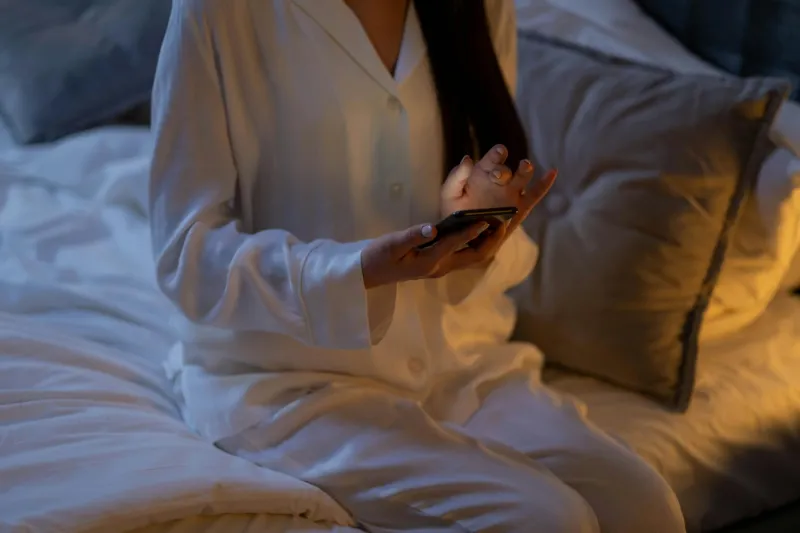
Right now, as you're reading this article (probably on your phone), millions of Americans are unknowingly conducting a cardiovascular experiment on themselves. Every late-night Instagram scroll, every Netflix episode watched past 10 PM, every work email checked from bed is creating a cascade of physiological changes that cardiologists are only beginning to understand.
The culprit isn't just the blue light itself — it's what that artificial illumination does to your body's internal clock, and how that disruption ripples through your entire cardiovascular system like a stone thrown into still water.
Dr. Amanda Foster, a sleep cardiologist at Stanford Medicine, has been tracking this phenomenon for years. "We're seeing patients with perfectly normal daytime blood pressure readings who have dangerous nighttime spikes that correlate directly with their evening screen habits," she explains. "Their hearts are essentially running a night shift they were never designed for."
 Photo: Stanford Medicine, via med.stanford.edu
The Circadian Conspiracy: How Blue Light Hijacks Your Heart's Schedule
Your heart operates on its own internal schedule, synchronized with your circadian rhythm. During normal sleep hours, your blood pressure should drop by 10-20%, your heart rate should slow, and your entire cardiovascular system should enter a restorative phase that's crucial for long-term heart health.
But blue light from screens disrupts this delicate choreography by suppressing melatonin production and confusing your suprachiasmatic nucleus — your brain's master clock. When your phone's screen tricks your brain into thinking it's still daytime, your heart keeps working at daytime intensity levels even while you're lying in bed.
Recent research published in the European Heart Journal followed 3,000 adults for five years and found that people who used screens for more than two hours after sunset had a 23% higher risk of developing cardiovascular disease, independent of other risk factors like diet, exercise, or family history.
 Photo: European Heart Journal, via is5-ssl.mzstatic.com
The Cortisol Connection: Why Your Heart Rate Spikes at Midnight
Here's where the science gets really concerning. When blue light exposure disrupts your circadian rhythm, it doesn't just affect sleep — it fundamentally alters your stress hormone production. Instead of cortisol levels naturally declining in the evening, they stay elevated or even increase.
Dr. James Liu, a preventive cardiologist at UCLA, explains the mechanism: "Elevated nighttime cortisol creates a perfect storm for cardiovascular stress. Your heart rate stays elevated, your blood pressure doesn't dip properly, and your blood vessels remain in a state of chronic tension."
This chronic elevation in stress hormones during what should be recovery hours means your cardiovascular system never gets the break it needs to repair and regenerate. It's like running your car engine at highway speeds while parked in your garage — eventually, something's going to break.
The Hidden Heart Rate Variability Crisis
One of the most alarming discoveries in recent sleep cardiology research involves heart rate variability (HRV) — the subtle variation in time between heartbeats that indicates a healthy, adaptable cardiovascular system.
People who use screens within two hours of bedtime show significantly reduced HRV during sleep, indicating that their autonomic nervous system is stuck in sympathetic overdrive. Low HRV is associated with increased risk of sudden cardiac death, heart attacks, and overall cardiovascular mortality.
"Think of HRV as your heart's ability to be flexible and responsive," says Dr. Foster. "Blue light exposure essentially makes your heart rigid and reactive when it should be calm and adaptive."
The Inflammatory Aftermath: What Happens After You Finally Put the Phone Down
Even after you finally turn off your devices, the cardiovascular damage continues. Disrupted circadian rhythms trigger inflammatory cascades that persist throughout the following day. Blood tests show elevated levels of inflammatory markers like C-reactive protein and interleukin-6 in people who regularly use screens late at night.
This chronic low-grade inflammation is particularly insidious because it's invisible and gradual. You won't feel chest pain or shortness of breath, but your arteries are slowly accumulating damage that increases your risk of heart disease over years and decades.
The Dopamine-Adrenaline Double Hit
Late-night scrolling creates a unique cardiovascular challenge because it combines the circadian disruption of blue light with the physiological stimulation of social media engagement. Every like, comment, and notification triggers a small release of dopamine and adrenaline — the same hormones involved in fight-or-flight responses.
When this happens repeatedly during what should be your body's wind-down period, you're essentially giving yourself micro-doses of cardiovascular stimulation right when your heart is trying to rest.
"It's like having someone repeatedly ring your doorbell while you're trying to sleep," explains Dr. Liu. "Your heart keeps getting jolted awake just as it's trying to enter recovery mode."
The Cardiologist's Evening Protocol
So how do leading heart doctors protect their own cardiovascular systems from the blue light onslaught? Their strategies are surprisingly simple but remarkably effective:
The 3-2-1 Rule: Stop eating 3 hours before bed, stop working 2 hours before bed, and stop all screen use 1 hour before bed.
Blue light blockers that actually work: Not all blue light filtering is created equal. Look for glasses that block at least 90% of blue light in the 450-480 nanometer range.
Strategic screen placement: Keep devices out of the bedroom entirely. Charge your phone in another room and use an analog alarm clock.
The red light transition: Some cardiologists use red-spectrum lighting in the evening, which doesn't disrupt circadian rhythms and can actually support natural melatonin production.
The Heart-Sleep Connection You Can't Ignore
The most compelling evidence for taking evening screen time seriously comes from long-term cardiovascular outcome studies. People who maintain consistent evening routines without screens have measurably better heart health markers across every category: lower resting heart rate, better blood pressure control, reduced arterial stiffness, and lower rates of cardiovascular events.
"We used to think of sleep as passive recovery time," says Dr. Foster. "Now we understand it's active cardiovascular maintenance. When you disrupt that process with artificial light, you're literally shortening your heart's lifespan."
The Bottom Line: Your Heart Needs Darkness
Your phone might be the most convenient thing in your life, but it's also potentially the most dangerous thing in your bedroom. The blue light streaming from your screen isn't just stealing your sleep — it's stealing years from your heart.
The solution isn't complicated, but it requires genuine commitment to treating your evening routine as seriously as you'd treat a prescription medication. Because in a very real sense, that's exactly what it is: preventive medicine for your cardiovascular system.
Your heart evolved to work in harmony with natural light cycles. Every time you disrupt that rhythm with artificial illumination, you're conducting an experiment with potentially fatal consequences.
It's time to turn off the lights and give your heart the darkness it desperately needs.