2 AM, Bad News Feed, Racing Heart: How the Algorithm Became America's Cardiologist's Worst Nightmare
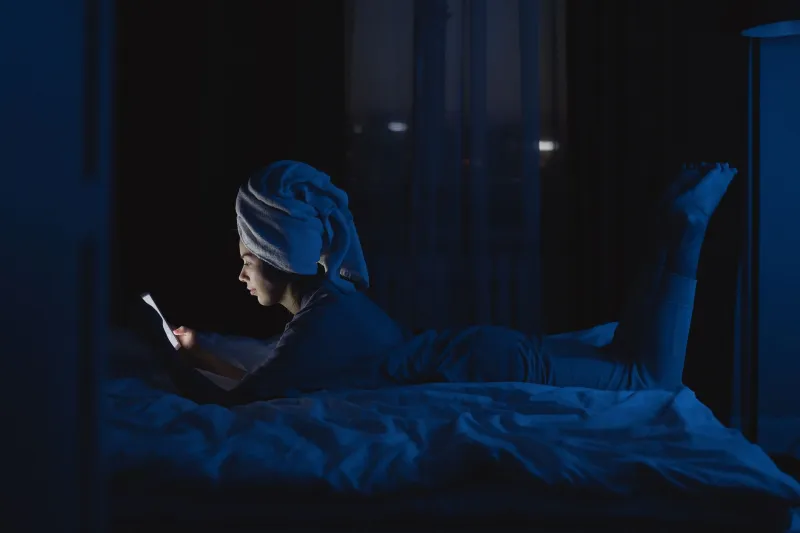
It's 2:07 AM. You were supposed to be asleep an hour ago. Instead, you're lying in the dark, phone six inches from your face, watching a video that makes your blood pressure spike — followed immediately by another one that makes it spike again. Somewhere in Silicon Valley, a server quietly registers your engagement and serves you the next outrage-optimized piece of content.
Your heart rate, meanwhile, is doing something your cardiologist would very much like to discuss.
The Machine Was Built to Agitate You
Let's start with something the tech industry has spent considerable money helping people not think about: social media algorithms are not designed to make you feel good. They are designed to maximize engagement — time on platform, clicks, shares, comments. And the content that reliably generates those metrics?
Fear. Outrage. Anxiety. Moral indignation.
Former tech insiders have testified to Congress about this. Internal documents from major platforms have confirmed it. The algorithm doesn't care whether the emotion it's triggering is positive or negative — it cares that you're feeling something strongly enough to keep scrolling. And the human brain, wired by millions of years of evolution to treat threats as priority information, is spectacularly easy to exploit.
Every piece of alarming content that lands in your feed has been A/B tested, refined, and optimized to provoke exactly the physiological response it produces. You're not doom-scrolling because you lack willpower. You're doom-scrolling because you're up against engineering teams whose entire job is to make sure you do.
What's Actually Happening Inside Your Chest
Here's where it gets cardiologically interesting.
When you encounter a threatening or outrage-inducing stimulus — even a digital one — your amygdala doesn't stop to verify whether the danger is physical or algorithmic. It fires. Cortisol and adrenaline flood your system. Your heart rate increases. Blood pressure rises. Blood vessels constrict slightly as your body prepares for a threat that never actually arrives.
In small doses, this response is harmless. The problem is the dose.
The average American spends over seven hours per day looking at screens, with a significant chunk of that time on social media platforms specifically engineered to trigger repeated stress responses. Each individual spike might be minor. But string together dozens of them across a day — and then extend that pattern across months and years — and you're looking at a sustained cardiovascular load that researchers are only beginning to quantify.
A 2023 study published in BMC Public Health found that high social media use was significantly associated with elevated perceived stress, anxiety, and depression — all established risk factors for cardiovascular disease. Research from Harvard's T.H. Chan School of Public Health has linked chronic psychological stress to increased rates of heart attack and stroke, with the mechanisms running through inflammation, blood pressure dysregulation, and autonomic nervous system dysfunction.
The algorithm, in other words, is doing something measurable to your arteries.
The 2 AM Variable
Now add the timing factor, and things get significantly worse.
Night-time scrolling compounds the cardiovascular problem in at least two distinct ways. First, the blue light emitted by phone screens suppresses melatonin production and disrupts circadian rhythms — and circadian disruption is independently linked to hypertension, insulin resistance, and elevated inflammatory markers. Second, your body's cortisol regulation follows a daily cycle. At 2 AM, your stress response system is supposed to be in low-power mode. Triggering it with algorithm-curated outrage at that hour is the physiological equivalent of flooring the gas while the engine is cold.
Sleep deprivation — even partial, chronic sleep deprivation of the kind that results from regular late-night scrolling — is one of the cleaner predictors of cardiovascular risk we have. People sleeping fewer than six hours per night show measurably higher rates of hypertension, coronary artery disease, and cardiac events. The American Heart Association lists sleep duration as a component of its cardiovascular health framework for exactly this reason.
Your 2 AM scroll session isn't just a bad habit. It's a layered cardiovascular insult: stress hormone activation, inflammatory cascade, circadian disruption, and sleep truncation, all delivered in one convenient package with a notification sound.
The Notification as a Cardiac Event
We should talk about notifications specifically, because they deserve their own moment of concern.
Each notification ping — each red badge, each vibration — triggers a micro-stress response. Your brain interprets the alert as potentially important information requiring immediate attention. Heart rate variability, a sensitive marker of autonomic nervous system balance and cardiovascular health, dips briefly with each one. For someone receiving dozens of notifications per hour across multiple apps, that's dozens of small autonomic disruptions across the day.
Researchers at the University of California, Irvine found that it takes an average of 23 minutes to fully regain focus after an interruption. Apply that to a workday punctuated by constant notification pings, and you're looking at a person who never actually achieves the calm, parasympathetic-dominant state that allows the cardiovascular system to recover and regulate.
The heart needs rest periods. The algorithm is designed to prevent them.
Breaking the Cycle Without Throwing Your Phone in a Lake
The answer isn't digital abstinence — let's be realistic. But there are evidence-based interventions that can meaningfully reduce the cardiovascular burden of your online life.
Set a hard screen cutoff at least 60 minutes before bed. This isn't just about sleep hygiene — it's about giving your cortisol system time to downregulate before you're horizontal. The American Heart Association's sleep guidelines support this directly.
Turn off non-essential notifications entirely. Not on silent — off. The micro-stress of notification interruptions adds up in ways that are genuinely measurable on cardiovascular markers. Your texts will still be there when you choose to check them.
Audit your algorithm intentionally. Platforms give you tools to tell the algorithm what you don't want to see. Use them aggressively. Unfollow accounts that reliably make your chest tight. The algorithm learns fast.
Schedule your scroll. Giving yourself two intentional 15-minute windows for social media — rather than passive, continuous access — dramatically reduces total stress exposure without requiring you to quit entirely.
Check your blood pressure after a scrolling session. Genuinely. If you have a home cuff (and you should), take a reading before and after a 20-minute scroll session. What you find might be the most effective behavior-change tool available.
The Pulse Check
The algorithm isn't going to voluntarily stop doing what it was built to do. It's extraordinarily good at its job, and its job is to keep you engaged through emotional activation — including the kind that sends your heart rate north and your sleep quality south.
But knowing what's happening inside your chest while you scroll is itself a form of power. Your cardiovascular system is responding to every piece of engineered outrage as if it were a real threat. At some point, the question becomes: how many fake emergencies do you want your heart to respond to tonight?
The feed will still be there in the morning. Your arteries are trying to get some rest.