Your Smartwatch Saw It Coming: What Your Sleep Data Is Really Telling You About Your Heart
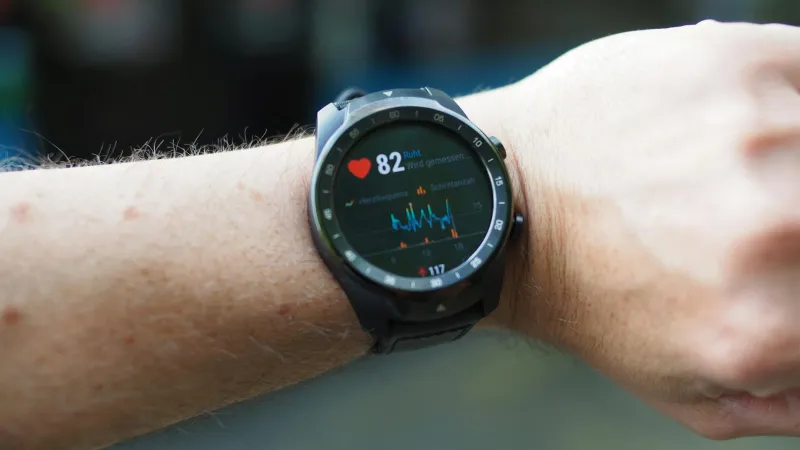
Your Smartwatch Saw It Coming: What Your Sleep Data Is Really Telling You About Your Heart
Every morning, roughly 100 million Americans glance at their wrist and swipe past a flood of overnight data without a second thought. Sleep score: 72. HRV: 38ms. SpO2: 94%. Resting heart rate: 68 bpm. Numbers that look like the readout from a machine you'd find in a hospital — because increasingly, that's exactly what they are.
Here's the uncomfortable truth that's quietly emerging from research labs and cardiology clinics across the country: your wearable device may already know your heart is under stress. The question is whether you're paying attention.
America's Sleep Problem Has a Cardiovascular Price Tag
Let's start with the scale of the issue. The CDC estimates that more than one in three American adults regularly get less than the recommended seven hours of sleep. But the problem isn't just duration — it's quality, architecture, and what happens to your cardiovascular system during those hours your eyes are closed.
During healthy sleep, your heart rate should drop, your blood pressure should fall in what doctors call a "dipping" pattern, and your autonomic nervous system should shift toward recovery mode. When that process is disrupted — by sleep apnea, chronic stress, alcohol, or simply fragmented sleep — your heart doesn't get the restoration it needs. And over time, that debt accumulates in ways that are measurable, predictable, and increasingly detectable by the device on your wrist.
A 2023 study published in npj Digital Medicine found that wearable-derived sleep metrics — particularly HRV trends and nocturnal heart rate patterns — could identify individuals at elevated cardiovascular risk with accuracy comparable to traditional clinical screening tools. That's not a minor footnote. That's a paradigm shift sitting on millions of nightstands.
Decoding the Numbers: What HRV Actually Means
Heart rate variability — HRV — is arguably the most powerful and least understood metric that consumer wearables now track. It sounds counterintuitive: shouldn't a healthy heart beat like a metronome? Actually, no. A higher HRV means your heart is responsive — it speeds up when it needs to, slows when it can, and adapts fluidly to the demands of your nervous system. Low HRV, especially over consecutive nights, is a signal that your autonomic system is under strain.
"HRV is essentially a window into the balance between your sympathetic and parasympathetic nervous systems," explains Dr. Nathaniel Brooks, a cardiologist and digital health researcher at a university hospital in Boston. "When we see chronically low HRV in a patient's wearable data, it often precedes clinical findings — elevated inflammatory markers, early arterial stiffness, even arrhythmia in some cases."
Apple Watch, Fitbit Sense, Garmin Fenix, and WHOOP all measure HRV using photoplethysmography (PPG) — the same green light sensor that tracks your pulse. While the accuracy varies between devices, the trend data over time is what matters most. A single low night means little. A two-week downward slide? That's your body waving a flag.
What to watch for: If your HRV drops more than 20% below your personal baseline for five or more consecutive nights, that's worth a conversation with your doctor.
The SpO2 Story: When Your Blood Oxygen Dips in the Dark
Blood oxygen saturation — SpO2 — is the other overnight metric that's generating serious buzz in cardiovascular research circles. Healthy adults typically maintain SpO2 levels between 95% and 100% during sleep. Frequent dips below 90%? That's a red flag that could indicate obstructive sleep apnea — a condition affecting an estimated 30 million Americans, the majority of whom remain undiagnosed.
Here's where the heart connection gets serious. Untreated sleep apnea is associated with a dramatically elevated risk of hypertension, atrial fibrillation, coronary artery disease, and stroke. Each time your airway partially closes during sleep and your oxygen drops, your body triggers a stress response — surging cortisol, spiking heart rate, and a cardiovascular system that never truly rests.
The Apple Watch Series 6 and later, Fitbit Sense 2, and several Garmin models now track overnight SpO2 continuously. Many users have the feature enabled and have never once looked at the graph.
"I've had patients come in after their watch flagged repeated overnight oxygen dips," says Dr. Brooks. "In two cases last year, that data was the first indication we had of significant sleep apnea. Both patients needed intervention. The watch didn't diagnose them — but it got them through my door."
What to watch for: Regular SpO2 readings below 94% during sleep, or frequent sharp dips even if the average looks normal.
Irregular Rhythm Alerts: When the Algorithm Notices What You Don't
Perhaps the most dramatic development in consumer cardiac monitoring is the AFib detection capability now built into Apple Watch (Series 4 and later), Fitbit Sense, and select Samsung Galaxy watches. Atrial fibrillation — an irregular, often rapid heart rhythm — is the most common serious cardiac arrhythmia in the US, affecting roughly six million Americans. It significantly increases stroke risk and often presents with no symptoms at all.
Multiple peer-reviewed studies, including the landmark Apple Heart Study published in The New England Journal of Medicine, have validated that smartwatch-based irregular rhythm notifications can identify AFib with high sensitivity. The FDA has cleared several of these features as medical-grade screening tools — a designation that carries real clinical weight.
But here's the nuance the headlines often skip: a notification is not a diagnosis. "These alerts are a starting point, not an endpoint," cautions Dr. Renata Vasquez, a cardiac electrophysiologist in Miami. "I've seen patients panic after a single irregular rhythm notification that turned out to be benign ectopic beats. I've also seen patients dismiss persistent alerts for weeks. The technology is remarkable — but it needs a clinician to interpret it properly."
The Data Blind Spot: What Wearables Still Can't Tell You
For all their impressive capability, consumer wearables have real limitations that deserve honest acknowledgment. PPG-based heart rate monitoring is less accurate during vigorous movement and in individuals with darker skin tones — a disparity that researchers are actively working to address. HRV measurements vary between devices and can be influenced by alcohol, illness, and hydration in ways that algorithms don't always distinguish from genuine cardiovascular signals.
Additionally, wearables currently cannot detect silent heart attacks, measure blood pressure continuously (despite ongoing development in this area), or assess arterial plaque. They are powerful screening and trend tools — not replacements for an EKG, echocardiogram, or a proper clinical workup.
Your Sleep Heart Health Checklist: Take Action Tonight
So you've got the data. Now what? Here's your action plan:
- ✅ Enable overnight SpO2 monitoring — Check your wearable settings. If the feature exists, turn it on and check your nightly graph weekly.
- ✅ Establish your HRV baseline — Give your device 2–3 weeks to calibrate your personal range, then watch for sustained downward trends rather than single-night dips.
- ✅ Set up irregular rhythm notifications — If your device offers AFib detection (Apple Watch, Fitbit Sense 2, Samsung Galaxy Watch), activate it.
- ✅ Screenshot and share concerning trends — Most wearable apps allow data export. If you see something worrying, bring the visual to your next doctor's appointment.
- ✅ Don't ignore consecutive poor sleep scores — A sleep score below 60 for more than a week straight isn't just fatigue. It's a signal worth investigating.
- ✅ Call your doctor if: You see SpO2 regularly dipping below 94%, your HRV has trended downward for two or more weeks, or you receive an irregular rhythm notification — especially more than once.
- ✅ Upgrade your sleep hygiene — Consistent bedtime, a cool dark room, no screens 30 minutes before sleep, and limiting alcohol (which devastates sleep architecture and suppresses HRV).
The Pulse of the Matter
Your smartwatch was never just a fitness tracker. It was always a health monitor waiting for the research to catch up to its potential. That moment has arrived.
The data streaming off your wrist every night represents something genuinely new in the history of preventive medicine: continuous, passive, personalized cardiovascular monitoring available to anyone who can afford a $200 device. Used wisely — and interpreted with medical guidance — it could be one of the most powerful tools in America's fight against heart disease, the country's number one killer.
The question isn't whether your watch is watching your heart. It is. The question is whether you're watching back.