Your Wrist Knows More Than You Think: The Hidden Health Secrets Your Smartwatch Is Already Tracking
Your Wrist Knows More Than You Think: The Hidden Health Secrets Your Smartwatch Is Already Tracking
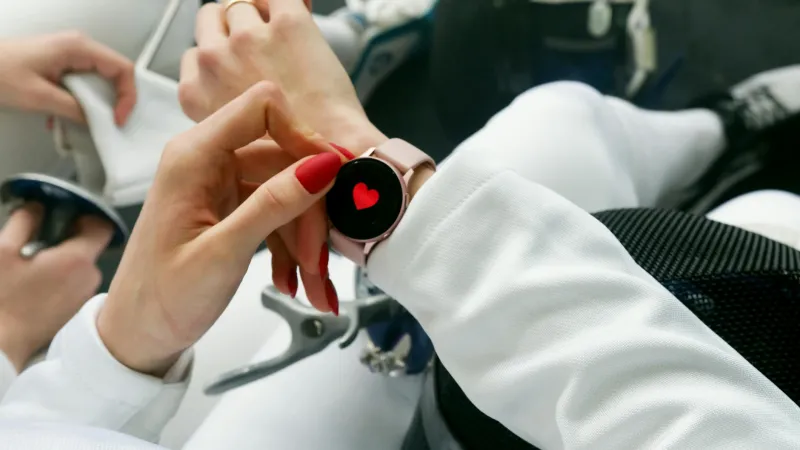
You glance at your wrist to check the time. Maybe you peek at your step count. But while you're scrolling past notifications and silencing alarms, that little device strapped to your arm is doing something far more extraordinary — it's quietly taking your pulse on life itself.
Consumer wearable health tech has exploded in the last few years, and we're not just talking fitness upgrades. The latest smartwatches from Apple, Fitbit, Garmin, and Samsung are packing FDA-cleared medical-grade features that would've seemed like sci-fi a decade ago. We're talking heart rhythm analysis, sleep apnea screening, blood oxygen monitoring, and beyond. This isn't your dad's pedometer.
So what exactly is happening inside your body right now that your watch can actually pick up? Buckle in.
Your Heart Is Telling Stories — Is Anything Listening?
Let's start with the big one: atrial fibrillation, or AFib. It's the most common serious heart rhythm disorder in the US, affecting an estimated 6 million Americans — and a huge chunk of them have no idea they have it. AFib can quietly increase your stroke risk fivefold, which is why early detection is such a game-changer.
The Apple Watch Series 4 and later models carry an FDA-cleared ECG app that can generate a single-lead electrocardiogram right from your wrist in about 30 seconds. Fitbit's Sense and Charge series also got FDA clearance for irregular heart rhythm notifications. These aren't gimmicks — they're real clinical tools sitting on your arm during your morning commute.
And the stories coming out of everyday users? Genuinely jaw-dropping. A 34-year-old teacher in Ohio received an AFib alert from her Apple Watch during a quiet Sunday afternoon — she had zero symptoms. Her cardiologist later confirmed the diagnosis and started her on blood thinners before a stroke could happen. That's a wrist-sized miracle.
Breathing While You Sleep (Or Not)
Here's one that flew under the radar but is now making serious waves: sleep apnea detection. Apple rolled out a sleep apnea notification feature with the Apple Watch Series 9 and Ultra 2, earning FDA clearance in late 2024. The watch uses its accelerometer to detect subtle wrist movements linked to breathing disruptions — called "breathing disturbances" — while you sleep.
Sleep apnea affects roughly 30 million Americans, and most cases go undiagnosed for years. Untreated, it's connected to high blood pressure, heart disease, and Type 2 diabetes. Having a device that nudges you toward getting a proper sleep study? That's not just convenient — it could genuinely reshape someone's long-term health trajectory.
Garmin has also stepped up here, with its Body Battery and sleep tracking algorithms on devices like the Fenix 7 and Venu 3 offering detailed breakdowns of REM cycles, restlessness, and breathing rate patterns throughout the night.
The Oxygen in Your Blood — Live, From Your Wrist
Blood oxygen saturation (SpO2) became a household term during the COVID-19 pandemic, and smartwatches were right there to meet the moment. Devices from Apple, Fitbit, and Garmin use infrared light sensors on the back of the watch to estimate how much oxygen your red blood cells are carrying.
Normal SpO2 sits between 95% and 100%. A consistent dip below 90%? That's a red flag worth calling your doctor about. For people with respiratory conditions like COPD or asthma — or anyone recovering from illness — having that data passively tracked around the clock adds a meaningful layer of awareness.
Important caveat: these consumer devices aren't replacements for medical-grade pulse oximeters. But as an early warning system? They're pulling their weight.
Stress, HRV, and the Nervous System You Didn't Know You Could Monitor
Here's where things get genuinely fascinating. Heart rate variability — or HRV — is the slight variation in time between each heartbeat, and it turns out it's one of the most telling windows into your body's stress response and recovery state. A higher HRV generally signals that your nervous system is balanced and resilient. A tanking HRV? Your body might be fighting off illness, dealing with chronic stress, or not recovering well from that leg day.
Garmin and Fitbit have leaned hard into HRV tracking, with features like Garmin's HRV Status and Fitbit's Daily Readiness Score translating raw data into actionable guidance. Think of it as your body's daily report card — and your watch is the teacher.
Apple Watch also tracks HRV in the background through the Health app, feeding data into trends you can share directly with your physician.
So... Should You Upgrade? A Quick Buyer's Take
If you're still rocking a basic fitness band or nothing at all, the case for upgrading to a feature-rich smartwatch has never been stronger. Here's a quick cheat sheet:
- Best for heart health focus: Apple Watch Series 9 or Ultra 2 — ECG, AFib detection, sleep apnea notifications, blood oxygen
- Best for sleep and recovery: Garmin Venu 3 or Fenix 7 — deep HRV insights, Body Battery, advanced sleep staging
- Best value for health tracking: Fitbit Charge 6 — irregular rhythm alerts, SpO2, stress management score, and Google integration at a lower price point
- Best for Android users who want it all: Samsung Galaxy Watch 6 — ECG, blood pressure monitoring (requires calibration), sleep coaching
Prices range from around $150 for a solid Fitbit to $800-plus for the Apple Watch Ultra 2. The sweet spot for most people? Somewhere in the $300–$500 range gets you the bulk of the FDA-cleared features without breaking the bank.
The Bottom Line: Your Body Is Talking. Your Watch Is Listening.
We're living in a genuinely remarkable moment for personal health. The same wrist that used to just tell you it was 2:47 PM is now quietly watching for arrhythmias, flagging breathing disruptions, and tracking the microscopic fluctuations in your heartbeat that hint at how your body is really doing.
None of this replaces your doctor. Let's be crystal clear about that. But as a first line of awareness — a personal health guardian that never takes a day off — the modern smartwatch has earned its spot as one of the most powerful preventive tools an everyday American can own.
So next time you glance at your wrist, remember: something pretty extraordinary is happening under the surface. Your pulse is speaking. It's worth paying attention.
— DeShawn Okafor, Vital Pulse News