The Left Arm Lie: Why Half of America's Blood Pressure Readings Could Be Dead Wrong
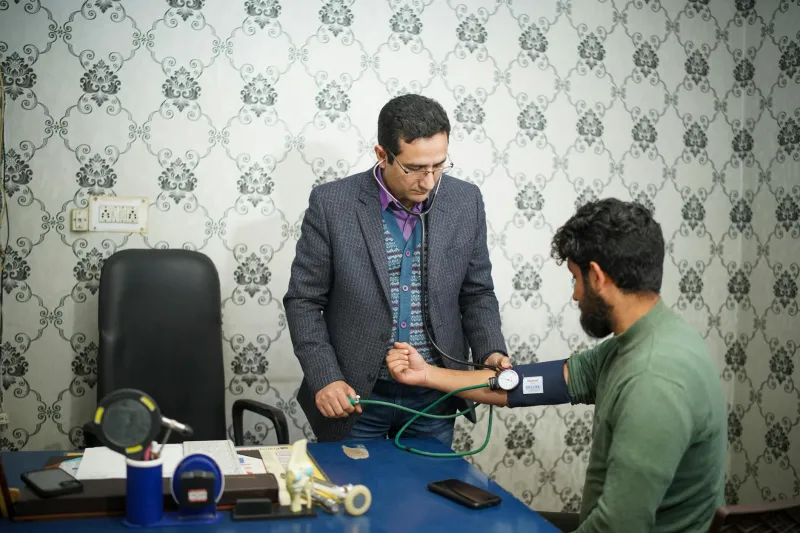
The Arm Your Doctor Ignores Could Hold Life-Saving Clues
Walk into any doctor's office in America, and chances are your blood pressure will be taken on whatever arm happens to be closest to the nurse. Left arm, right arm — what's the difference, right? Turns out, that casual approach to one of medicine's most basic measurements could be missing a red flag that's hiding in plain sight.
Cardiologists are increasingly concerned about what they call "inter-arm blood pressure differences" — and the numbers they're seeing should make every American pay attention. When there's a significant gap between the readings on your left and right arms, it's not just a quirky body variation. It's potentially your cardiovascular system sending up a flare.
The 20-Point Rule That Changes Everything
Here's what most people don't know: a difference of 20 mmHg or more between your arms isn't just unusual — it's a clinical warning sign that something's going on with your arteries. Dr. Christopher Clark, a cardiovascular researcher at the University of Exeter, has spent years studying this phenomenon, and his findings are eye-opening.
"When we see these large inter-arm differences, we're often looking at peripheral arterial disease, subclavian stenosis, or other forms of vascular narrowing," Clark explains. "It's like having a traffic jam in one of your major highways — the blood pressure downstream is going to be different."
The American Heart Association now recommends taking blood pressure in both arms during initial visits, but here's the kicker: most healthcare providers still don't do it routinely. That means millions of Americans could be walking around with undiagnosed arterial problems that a simple two-arm check could catch.
What Your Arms Are Actually Telling You
The science behind inter-arm differences is surprisingly straightforward. Your heart pumps blood through major arteries that branch off to supply each arm. When one of these pathways gets narrowed or blocked — often by the same atherosclerotic plaques that cause heart attacks — the blood pressure reading on that side drops.
It's not just about the arm itself. These arterial problems often signal broader cardiovascular issues. Research published in the Lancet found that people with inter-arm blood pressure differences above 15 mmHg had a 38% higher risk of heart attack, stroke, or cardiovascular death over the next decade.
Dr. Sarah Martinez, a preventive cardiologist at Cleveland Clinic, puts it bluntly: "If we're seeing a big difference between arms, we're not just worried about that specific artery. We're wondering what else might be going on in the cardiovascular system that we can't see."
The Questions Your Doctor Should Be Asking (But Probably Isn't)
So what should happen during your next blood pressure check? First, your healthcare provider should take readings on both arms, preferably simultaneously or within a few minutes of each other. The higher reading is typically considered your "true" blood pressure, but the difference between the two is just as important.
If there's a gap of 10-15 mmHg, that warrants attention and follow-up measurements. A difference of 20 mmHg or more? That should trigger additional cardiovascular screening, potentially including ankle-brachial index testing, arterial imaging, or referral to a vascular specialist.
But here's the reality check: most Americans have never had their blood pressure taken in both arms during the same visit. It's a simple, inexpensive test that could provide crucial information about cardiovascular health, yet it's routinely skipped in busy medical practices.
Taking Control of Your Next Checkup
The good news? You don't have to wait for your doctor to remember this important step. At your next appointment, simply ask: "Can we check my blood pressure in both arms today?" It's a reasonable request that any healthcare provider should be happy to accommodate.
If you do discover a significant inter-arm difference, don't panic. Not every gap between arms signals serious disease. Anatomical variations, temporary muscle tension, or even the position of your arm during measurement can create small differences. But persistent, large gaps deserve investigation.
Dr. Martinez recommends patients keep track of these numbers: "Write down both readings and the difference. If you're consistently seeing gaps of 15 mmHg or more, that's information your cardiologist needs to know."
The Bigger Picture
This isn't just about blood pressure technique — it's about taking ownership of your cardiovascular health. Simple questions and basic awareness can sometimes catch problems that more expensive tests might miss. Your arms are essentially giving you a free screening test for arterial health every time that cuff goes on.
The next time you're getting your blood pressure checked, remember: the arm your doctor chooses might matter more than either of you realizes. Don't let convenience override a potentially life-saving measurement. Your heart — and your arteries — will thank you for speaking up.