Open Wide — Your Dentist Is About to Give Your Heart a Workout It Didn't Ask For
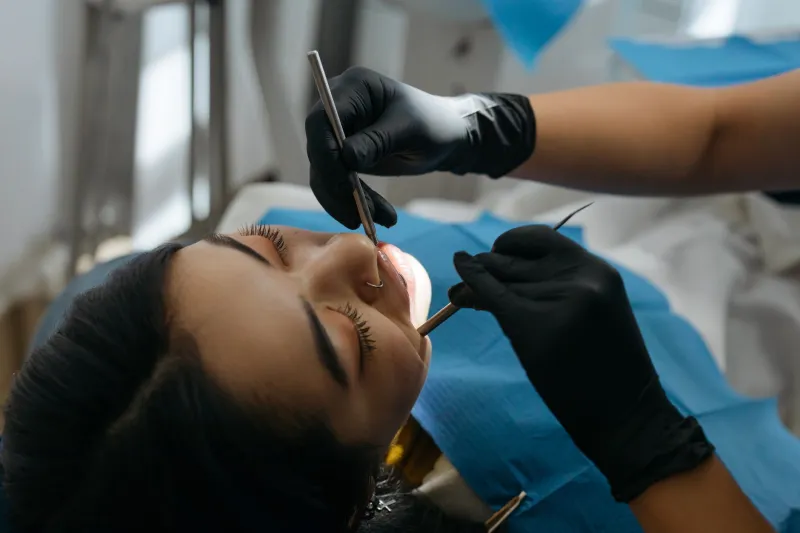
You scheduled the cleaning, you flossed for the first time since your last appointment, and you showed up on time. Responsible adulting, full marks. What nobody in that cheerful dental office mentioned is that the same procedure keeping your teeth pristine can send a brief wave of bacteria straight toward your heart — and for some Americans, that's not a footnote. That's a genuine clinical conversation they should be having before the hygienist picks up the scaler.
The Mouth-Heart Pipeline Is Very Real
Dentistry and cardiology have been quietly sharing research for decades, and the relationship between oral health and cardiovascular health is one of the more solidly established connections in medicine. The basic mechanism isn't complicated: your mouth is home to hundreds of bacterial species, many of them perfectly harmless in their natural habitat. But the moment a dental procedure disturbs the gum tissue — even a routine cleaning — some of those bacteria get a direct ticket into your bloodstream.
This is called bacteremia, and in healthy individuals with intact immune systems and normal heart anatomy, it's typically a non-event. The immune system clears it. You leave with cleaner teeth and a new toothbrush. Done.
But "typically" is doing a lot of work in that sentence.
For people with certain underlying cardiac conditions — particularly those with prosthetic heart valves, a history of infective endocarditis, specific congenital heart defects, or cardiac transplant patients with valvular issues — that same bacterial shower can trigger something far more serious: infective endocarditis, an infection of the heart's inner lining that carries a mortality rate of up to 30% even with treatment.
The American Heart Association has issued guidelines on this since the 1950s, updating them as evidence evolves. The current framework is more targeted than the old blanket antibiotic prophylaxis approach — but it still identifies specific high-risk populations for whom pre-procedure antibiotics are strongly recommended. The problem is that not everyone in those populations knows they're in them.
The Procedure Matters More Than You Think
Not all dental work carries equal risk, and this is where it gets nuanced in a genuinely useful way.
Routine examinations that don't involve manipulating gum tissue? Lower concern. But procedures that involve the gingival tissue or the periapical region of teeth — deep cleanings, extractions, periodontal surgery, implant placements — produce more significant bacteremia. The more invasive the manipulation of tissue that's already inflamed or infected, the higher the bacterial load entering the bloodstream.
Here's an uncomfortable truth: people with poor oral health — which correlates strongly with lower access to dental care, a significant equity issue in the U.S. — often have more inflamed gum tissue and more aggressive bacterial populations in their mouths. That means the patients most likely to have cardiac complications from dental procedures are often the same patients least likely to have had a cardiology conversation before sitting in the dental chair.
And gum disease itself — periodontitis — is independently associated with elevated cardiovascular risk. The inflammation that characterizes severe gum disease doesn't stay local. Research published in the European Journal of Preventive Cardiology and elsewhere has linked periodontal disease to increased rates of heart attack, stroke, and coronary artery disease — though researchers are still working out exactly how much of that relationship is causal versus shared risk factors like smoking and diabetes.
Either way, your mouth and your heart are having a conversation. The question is whether you're included in it.
The Spring Cleaning Season Problem
Here's a timing wrinkle worth noting: dental appointment scheduling in America has a rhythm. January, when new insurance benefits kick in. Spring, when people are motivated by fresh-start energy. And pre-summer, when parents are getting kids squared away before school lets out.
That means large numbers of Americans are sitting in dental chairs within similar windows — and many of them haven't had a recent cardiology check-in. For someone with undiagnosed hypertension, an undetected heart murmur, or a prosthetic valve they mention only when specifically asked, that timing gap can matter.
The dental chair is not, on its own, a cardiac stress test. But for patients with relevant risk factors, it can function as one in ways that catch everyone off guard.
What the Conversation Should Actually Sound Like
The fix here is refreshingly low-tech: communication between your dental team and your cardiac care team, initiated by you.
Tell your dentist your full cardiac history — all of it. Prosthetic valves. Past endocarditis. Congenital heart conditions. Cardiac transplant history. These aren't incidental details on the intake form; they're clinically significant information that changes how your procedure should be managed. If your intake form has a tiny checkbox for "heart problems" and you're not sure what counts, ask out loud.
If you have significant cardiac history, loop in your cardiologist before major dental work. A quick call or message through your patient portal asking whether antibiotic prophylaxis is appropriate for your upcoming procedure is a five-minute investment that can have real consequences. Many cardiologists are happy to weigh in — they just need to be asked.
Don't skip dental care out of fear. This is crucial. The oral health-cardiovascular link cuts both ways: untreated gum disease and chronic oral infections carry their own cardiac risks. Avoiding the dentist because you're worried about bacteremia is like avoiding your annual physical because you're afraid of bad news. The risk of inaction is real too.
Ask about timing relative to other health events. If you've recently had a cardiac procedure, a new valve, or a significant change in your cardiac medications, ask your cardiologist whether there's an optimal window for scheduling non-emergency dental work.
Know your own risk category. The AHA's high-risk categories for infective endocarditis prophylaxis are specific. If you have any of the conditions that put you in that group, it's worth knowing that explicitly — not just assuming your dentist will catch it.
The Bigger Picture
American healthcare's famous siloing problem — where your cardiologist doesn't talk to your dentist who doesn't talk to your primary care physician — creates real gaps in patient safety. The mouth-heart connection is one of the clearest examples of where those gaps show up in clinical outcomes.
The good news is that this particular gap is remarkably closeable, and you're the one with the leverage to close it. You're the one who sits in both chairs. You're the one who knows your full history. And you're the one who can start the conversation that neither specialist may think to initiate.
The Pulse Check
Your twice-yearly cleaning is still one of the better health investments you can make. Oral health is real health, and the evidence linking dental neglect to systemic inflammation is not going away.
But if your cardiac history is anything more than "completely unremarkable," your next dental appointment deserves a little more preparation than remembering to floss the night before. A three-minute conversation with your cardiologist. An honest answer on the intake form. A quick question to the hygienist before she picks up the tools.
Your teeth and your heart have been in a relationship this whole time. Maybe it's time you introduced them properly.